8 min read
The Control Plane Is Becoming a Software Category
By Goetz Weber
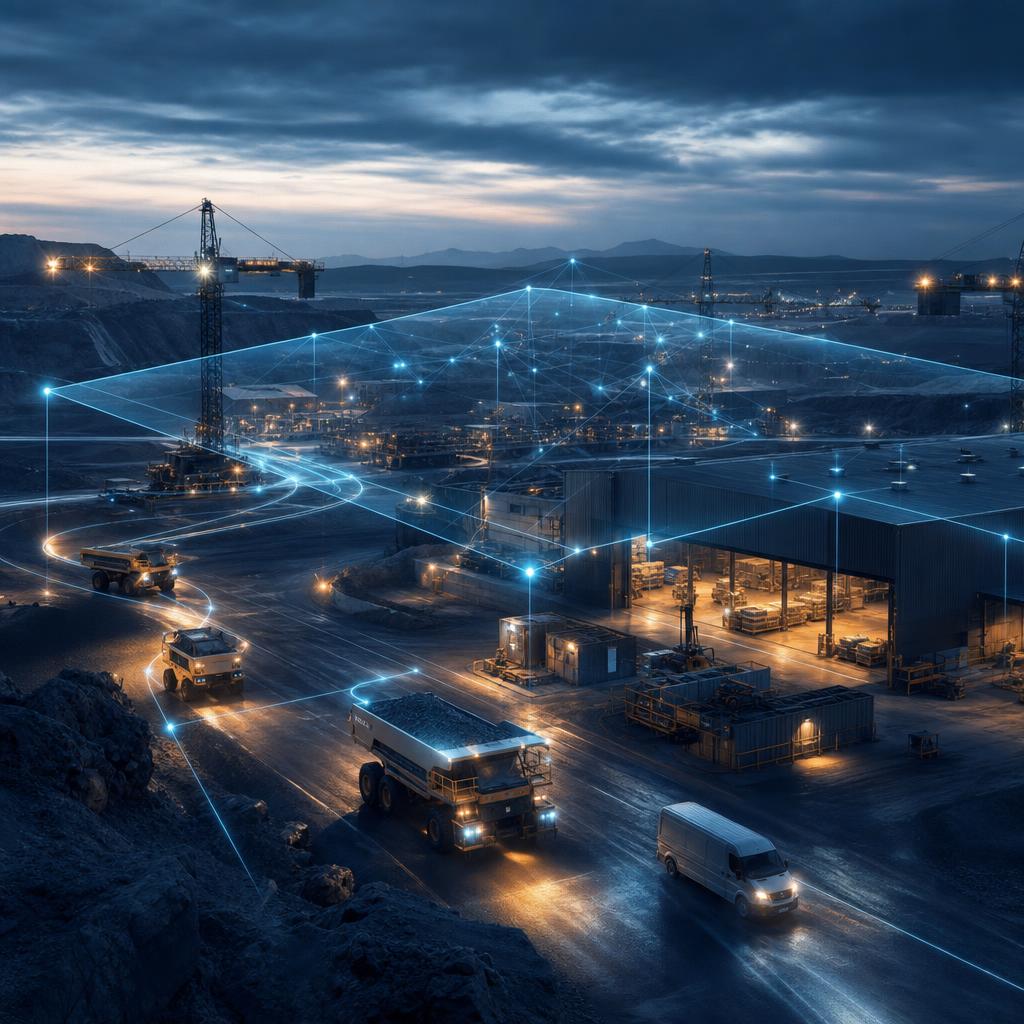
What fleet management, connected vehicles and industrial IoT need next: a control plane for identity, permissions and accountable operations.
Read article →Goetz Weber on commercial innovation, AI infrastructure, motion intelligence and the future of transportation.
By Goetz Weber
What fleet management, connected vehicles and industrial IoT need next: a control plane for identity, permissions and accountable operations.
Read article →
By Goetz Weber
Technologies do not create markets automatically. Market formation — the discipline of discovering which market is economically viable — is the missing strategic function in most technology companies.
Read article →
By Goetz Weber
In the AI era, we are creating technologies faster than markets can absorb them. The bottleneck is no longer engineering — it is market formation.
Read article →
By Goetz Weber
How seatbelt-era safety engineering shaped a smarter theory of value for freight risk intelligence — risk should not compete with revenue, it should be composed with it.
Read article →
By Goetz Weber
The freight stack is fragmented. Revenue, risk, routing, and dispatch are optimized in isolation. The missing layer is a composite application that makes them reason together.
Read article →
By Goetz Weber
The better a safety system works, the less visible its value becomes. Transport Safety Delta is designed to measure the risk that never materialized — and why that is the only number that matters.
Read article →
By Goetz Weber
Everyone in freight talks about trucks, routes, and telematics. Almost nobody talks about the transport itself — the composite operational object that freight technology leaves invisible.
Read article →
By Goetz Weber
RouteRisk started as a forward-looking route risk score. It became a continuously reasoning shipment agent — and the same intelligence that helps fleets avoid risk will help insurers price it.
Read article →
By Goetz Weber
Software interfaces are becoming cheap to generate. The scarce resource shifts from workflow ownership to trusted interpretation of operational consequence — and what that means for the next layer of the logistics stack.
Read article →
By Goetz Weber
Risk is not what a driver does — it is what a route will be when the vehicle gets there. A framework for fleet underwriters, loss control consultants, and autonomous fleet operators navigating the 2025–2035 hybrid window.
Read article →By Goetz Weber
Routing systems optimise distance and time. RouteRisk.AI optimises safety exposure — modelling the road network as a dynamic hazard field and converting risk into real-time dispatch guidance for fleets and insurers.
Read article →By Goetz Weber
Navigation tells you the fastest way to get there. Risk Map tells you whether getting there — on that route, at that time, in that vehicle — is a decision worth making. The next layer of navigation is a probabilistic risk surface, and commercial insurers are the natural first buyers.
By Goetz Weber
Trajectory Intelligence inverts the fleet safety model. Instead of analyzing what happened, it evaluates risk along a vehicle's planned route before that vehicle ever arrives at a hazardous segment—with significant implications for fleet operations and commercial insurance underwriting.

By Goetz Weber
Differentiation in AI is migrating from the reasoning layer to proprietary data, controlled grounding, and licensing architecture. Why the companies that structure the most durable ecosystems will win—not those that integrate the most datasets. Includes the Onion of Truth framework.

By Goetz Weber
AI agents are only insurable when architecture separates intent from authority. Why direct-execution agents create unbounded liability—and how the recommendation paradigm creates the actuarial signal that makes AI risk underwritable.

By Goetz Weber
A car is used thirty minutes a day but carries twenty-four-hour software risk. Why forcing continuous monetization onto episodic products destroys the value owners care about most.

By Goetz Weber
Idempotency guaranteed safe retries for a generation. But autonomous agents need temporal proof, not just deduplication. Introducing temporal idempotency—the missing primitive.

By Goetz Weber
Why the Field CTO is the most strategic growth lever in modern technology companies. From co-innovation to category creation, a framework for market-shaping leadership.

By Goetz Weber
Trust categories, physical AI, and the structural shift from discovery to admission. How epistemic interfaces replace traditional APIs as the governing contract for autonomous systems.
By Goetz Weber
How time becomes a machine-verifiable trust primitive in an agentic world. A technical specification for the Temporal Truth Schema.

By Goetz Weber
Why unambiguous timestamps will define the AI economy. As AI moves from description to transaction, truth becomes a function of when—not merely what.

By Goetz Weber
Timestamps are canonical. The system that owns canonical timestamps owns value—not the object, not the price, but the ordering itself.

Technical architecture for AI-native data interfaces: epistemic contracts, fact record schemas, platform trust pipelines, and the trust layer that determines what language models can assert.

How semantic code-change intelligence bridges the gap between engineering velocity and organizational awareness—delivering tailored briefings to every stakeholder from executives to marketing teams.

A comprehensive taxonomy distinguishing chatbots from true latent reasoning agents. Five categories from reactive sensors to strategic autonomous actors—defining why delegation of responsibility, not execution, marks genuine AI agency.
Comprehensive investor pitch deck presenting Maei.ai's $15B market opportunity in semantic search and deflection advertising. Year 5 projections: $206M ARR, 5M DAUs through RAG-based POI discovery and outcome-based advertising.

How RAG-based semantic search and route-aware deflection advertising create a $15B market opportunity competing with Yelp and Google through conversational POI discovery and outcome-based pricing.

How agentic AI platforms revolutionize POI data pipelines with autonomous procurement, schema harmonization, quality assurance, and customer-specific refresh rates through five-agent orchestration systems.

Strategic analysis of growth opportunities for HERE Technologies, TomTom, and Mapbox through closed-loop observation systems, semantic POI platforms, trajectory annotation services, and intelligent navigation systems.

For twenty years, we followed the blue line. Now Sygic's Live Alternative Routes, along with innovations from Zeekr, Beans.ai, Wise Systems, and Maei.ai, are building navigation that reflects human intent, not just algorithms.

Full-permissioned digital twins deliver 200% ROI through 24/7 availability, double-layer security, and operational continuity. Discover how dual permissioning transforms workforce capability without compromising data security.

AI agents are overhyped for knowledge work. What we actually need are digital twins—stateful, permissioned representations that preserve your knowledge, judgment, and context when you're offline. The future isn't automation, it's continuity of cognition.

A framework for scalable transformation: understanding Generative AI as a platform shift that transforms enterprises from data repositories into active reasoning substrates. Explores digital co-worker agents as semantic twins, architectural patterns, security frameworks, and the journey from pilots to programmatic innovation.

How the Trips Annotation Specification creates a structured semantic language for motion, enabling systems to answer not just 'what happened' but 'what should happen'—unlocking causal reasoning, compositional queries, and intelligent route optimization at scale.

Technical specification for mobility trip annotation: defining pickup/dropoff semantics, route geometry, environmental context, and ML-ready datasets that bridge rider experience with autonomous system training at scale.

Exploring the paradigm shift from coordinate-based navigation to intent-driven mapping systems, where mobility transforms from geometry into meaning through semantic AOI layers and Fourier-like transformations of trajectory data.

While traditional mapping systems capture the structural blueprint of our transportation networks, Tripology represents a paradigmatic shift toward dynamic, trip-specific analytics that transform raw movement data into actionable mobility intelligence.

Enterprise adoption of agentic geospatial systems is already reshaping supply chains, logistics, and infrastructure. But the far larger opportunity lies ahead: bringing these same capabilities into the everyday lives of billions of people.
The rise of agentic systems reveals a fundamental principle: structured permissions between entities are critical to realizing value at scale. Examining the evolution from Geospatial 1.0 to 3.0.
Consider a middleware layer that sits between users, spatial data, and commercial services—a system that is geospatially aware, commercially active, and agentic. Agentic Geospatial Middleware will change everything.
What happens when motion becomes a conversation? How trajectory intelligence transforms from passive observation to active dialogue through the Contextual Routing Communication Platform.

A technical deep-dive into the CRCP server architecture that transforms motion vectors into contextual driver communication through pure message relay protocols, inspired by Fleet.Chat's bidirectional communication model.

The next step forward is independent of the map provider. Instead of focusing on annotations as visual overlays, we focus on trajectory intelligence—a semantic model of movement, intent, and environment.

At Maei.ai, we believe motion through space and time is one of the most essential yet overlooked dimensions of human life. Motion is not a commodity—it is a modality of being human, and it is long overdue for reinvention.

Complete guide to the 100 pioneering companies that shaped the geospatial industry—from ESRI's GIS dominance to Planet's satellite constellations—exploring the ecosystem that paved the way for motion intelligence and semantic routing innovation.

Why the next generation of navigation systems will prioritize meaning over distance, transforming how we think about optimal routes.
A deep dive into our technical architecture and how we're creating the infrastructure for intelligent transportation.

In logistics, the gap between the plan and the actual remains one of the most stubborn sources of cost, risk, and wasted capacity. Discover how AI-driven driver communication bridges this gap.